Durability by Design: PMB’s Expanding Role in Norwegian Roads
Why Norway’s road authorities are turning to polymer modified bitumen (PMB) to meet road maintenance climate and cost challenges.
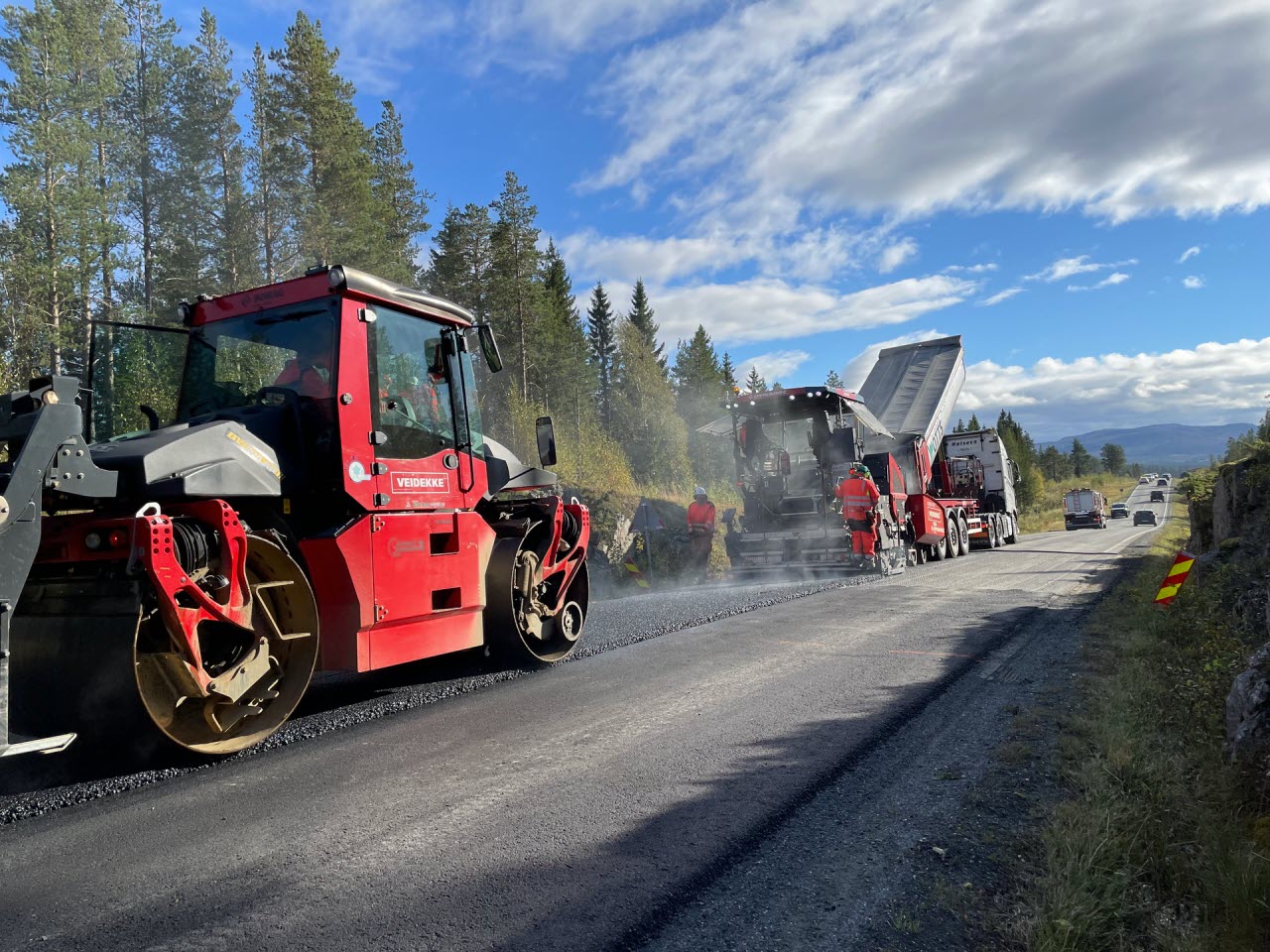
When Even Sund talks about Norway’s road network, he isn’t talking about smooth motorways stretching across level plains.
He’s talking about a long, mountainous country where roads are carved among fjords, hammered by freeze–thaw cycles, and challenged by everything from studded tyres to unexpected heatwaves.
“Last year in Trondheim we had several weeks above 30 degrees,” recalls Sund, who works with road maintenance and contracts at the Norwegian Public Roads Administration (NPRA).
“That’s not normal here. Our pavements now need to cope with both higher highs and still very low lows.”
Indeed, from the icy mountain passes to the sun-warmed roads of Oslo, Norway’s roads face some of Europe’s most extreme environmental stresses.
Yet the country has emerged as a quiet pioneer in adopting new materials and methods to boost road performance.
At the heart of this transformation is polymer modified bitumen (PMB), a solution that’s now used in approximately 40 percent of asphalt in maintenance contracts on Norway’s primary roads.
“We’ve seen that PMB plays a crucial role in improving the durability of asphalt under both high and low temperatures,” explains Sund.
“With climate change bringing more variation and stress to our roads, having a binder that can better handle extremes is more important than ever.”
A Data-Driven Path to Performance
Norway’s road sector is known for its rigorous approach to planning and evaluation. While Sund’s agency now only maintains 10,000 km of primary roads (smaller county roads are managed separately since a 2020 reorganisation), the NPRA’s standards and practices often set the tone nationwide.
“We’ve measured road conditions since the 1980s. That history of data gives us a strong base for evaluating the performance of different materials,” says Sund.
And the results for PMB have been convincing. It has repeatedly been shown to reduce cracking in cold conditions, resist rutting under heavy loads and high temperatures, and extend pavement life, all while lowering lifecycle maintenance costs.
In a country where asphalt is already expensive – often 25 percent higher in northern regions – longevity matters.
“If PMB didn’t have any effect, it would disappear quickly. Cost efficiency is always in focus, but the evidence has spoken thanks to experience,” Sund says.
“People feel confident using PMB because they’ve seen the results over time.”
Combining Environmental and Economic Logic
Norway’s push toward PMB coincided with another major shift: an increasing emphasis on sustainability. For the NPRA, that has meant weighing climate and environmental factors in public contracts, which accounts for at least 30 percent of the evaluation.
“That regulatory shift was a new factor in changing our approach,” says Sund.
“Reducing CO₂ emissions are now weighed alongside cost considerations when assessing contracts.”
PMB aligns well with this ambition. Longer-lasting roads mean less frequent repaving, reduced raw material use, and fewer emissions over time.
How Contracting Shapes Road Performance
Another factor behind Norway’s embrace of PMB stems from the country’s distinctive contracting model, which balances central guidance with local expertise.
“Our regulations and guidelines are centralised, but our contracting is quite decentralised in practice,” Sund explains.
“The people in each district know their roads, and they decide where PMB is used.”
That flexibility is paired with a growing emphasis on lifecycle performance rather than upfront price.
“These contracts calculate long-term costs, not just initial bids,” explains Sund.
These innovative “pilot contracts” give contractors freedom to propose their own solutions – including PMB mixes – and then evaluate bids based on annualised cost and predicted pavement life.
“If a contractor can deliver better deformation properties, that’s converted into longer pavement life in the tender evaluation,” says Sund.
“It rewards solutions that last."
The effect is simple: PMB becomes attractive not just technically, but economically.
The NPRA has already achieved a 50 percent reduction in CO₂ from pavement works since 2020, thanks to a combination of lower-temperature production, increased recycling, and material optimisation.
A Nordic Model for Others?
As neighbouring countries grapple with similar challenges such as aging infrastructure, rising material costs, and growing climate concerns, Norway’s experience with PMB may offer valuable lessons.
“PMB isn’t the only solution. But it’s an important tool, especially when you combine evidence, contracting strategy, and climate goals,” Sund concludes.
“It’s about making smart, long-term decisions that benefit taxpayers, drivers, and the environment.”
In a world of short-term budgets and quick fixes, Norway’s approach – evidence-based, performance-driven, and environmentally conscious – could inspire other countries to pave the way – quite literally – for roads built to last.