Can fungi become part of the solution for legacy industrial materials?
At Nynas, innovation means exploring new ways to address complex challenges. In an ongoing collaboration with Swedish biotechnology company MycoMine, we are investigating whether fungi-based treatment methods can help manage a challenging legacy industrial material at our production site in Nynäshamn.
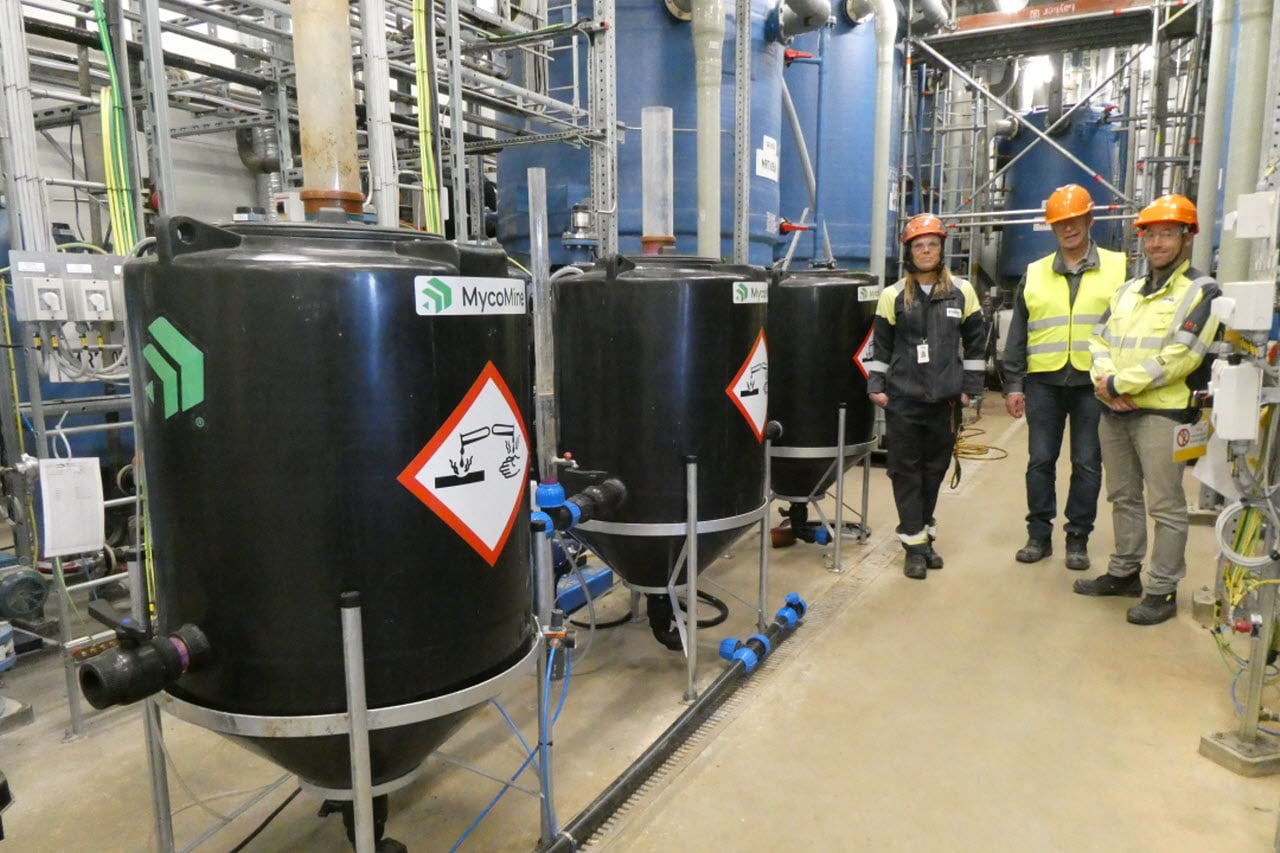
(Photo: Nynas employees Annika Ahlm, Peter Eriksson, Chris Winby)
The project, which started as a pilot in 2024, aims to build knowledge about how biological processes can complement traditional methods and, over time, enable more sustainable ways of managing this type of material.
Addressing a legacy challenge
The material being studied is legacy industrial material generated as a by-product of production processes from the 1950s and 1960s. It is safely contained and is now being further evaluated to identify potential complementary treatment methods, including whether biological approaches could offer new ways of managing it.
Similar materials exist in various forms at industrial sites around the world, where treatment options are often limited to incineration or long-term containment. Finding alternative solutions that can manage such materials safely and effectively therefore remains an important challenge for industry.
Exploring nature-based solutions
MycoMine specialises in mycoremediation – the use of fungi to break down complex contaminants through natural biological processes. Together, Nynas and MycoMine are exploring whether this approach can be adapted to challenging industrial materials.
The pilot project has been designed to evaluate how fungal cultures perform under demanding conditions and whether biological treatment can help transform the material into more manageable components. A key question has been whether fungi can remain active in environments with very low pH levels.
Initial results
Early observations indicate that selected fungal cultures can survive and grow despite the challenging conditions, providing an important foundation for continued research and further analysis.
Throughout the project, samples have been analysed in collaboration with external laboratories to better understand how the material changes over time and to assess the effectiveness of the treatment.
While the work is still at an early stage, the results so far have provided valuable insights into the potential of biological methods for challenging industrial materials.
Building knowledge for the future
For Nynas, the collaboration is primarily about building knowledge and understanding how emerging technologies can work in an industrial setting.
By testing innovative solutions in real operating environments, Nynas and MycoMine are contributing to a broader understanding of how legacy industrial materials might be managed in the future – supporting the development of more sustainable solutions for challenging industrial materials.