How climate change is changing the conversation around PMB in Sweden
As Sweden looks to build longer-lasting and more climate-resilient infrastructure, VTI researcher Jiqing Zhu believes polymer modified bitumen (PMB) could play an increasingly important role. But unlocking its full potential will require better knowledge, smarter recycling, and a broader lifecycle perspective.

When Jiqing Zhu talks about polymer modified bitumen (PMB), it quickly becomes clear this is more than just another research topic.
“It’s still one of my favourite topics,” says Zhu, Senior Researcher in Road and Railway Engineering at the Swedish National Road and Transport Research Institute (VTI).
“Bitumen is already a very complex material. But when we add polymer-modification into the equation, it becomes even more complex. It shows very unique behaviours – in chemistry, mechanics, and physics. That really stimulates my curiosity as a researcher.”
That curiosity has shaped much of Zhu’s career. His PhD thesis at the Royal Institute of Technology (KTH) in Stockholm focused on the storage stability and phase separation behaviour of PMB, and nearly a decade later, the material remains central to his work at VTI.
Today, however, his focus has expanded far beyond laboratory theory. Zhu’s research increasingly centres on how PMB can help create roads that are not only more durable, but also more sustainable and resilient in a changing world.
Breaking a knowledge catch-22
Compared with countries such as Germany, Poland and Norway, Sweden has traditionally used relatively little PMB. According to Zhu, that has created something of a knowledge paradox.
"I think the lack of knowledge is part of the reason why we don't use it very much," he says.
"If we used it more then we’d gain the experience and knowledge about where else we could use PMB."
According to Zhu, a “unique” set of circumstances in Sweden may have hampered the more widespread adoption of PMB compared with other countries.
The high prevalence of studded tyres, for example, can reduce the lifespan of surface layers, raising doubts about whether the full benefits of PMB can be realised.
Sweden’s easy access to high-quality aggregates has also meant road owners may believe they can achieve high pavement performance with conventional binders.
And Sweden's relatively moderate climate has traditionally placed fewer demands on asphalt than many other parts of Europe, where temperature variations can be more extreme.
Taken together, those conditions meant there was often less incentive to invest in higher-performance binders across the wider road network. As a result, opportunities to build experience with PMB have remained relatively limited.
But Zhu believes the context is changing.
"We are seeing concerns about more extreme high temperatures, while still having very low temperatures in winter," he says.
"In this context, PMB could be one tool in the toolbox to address the changing climate."
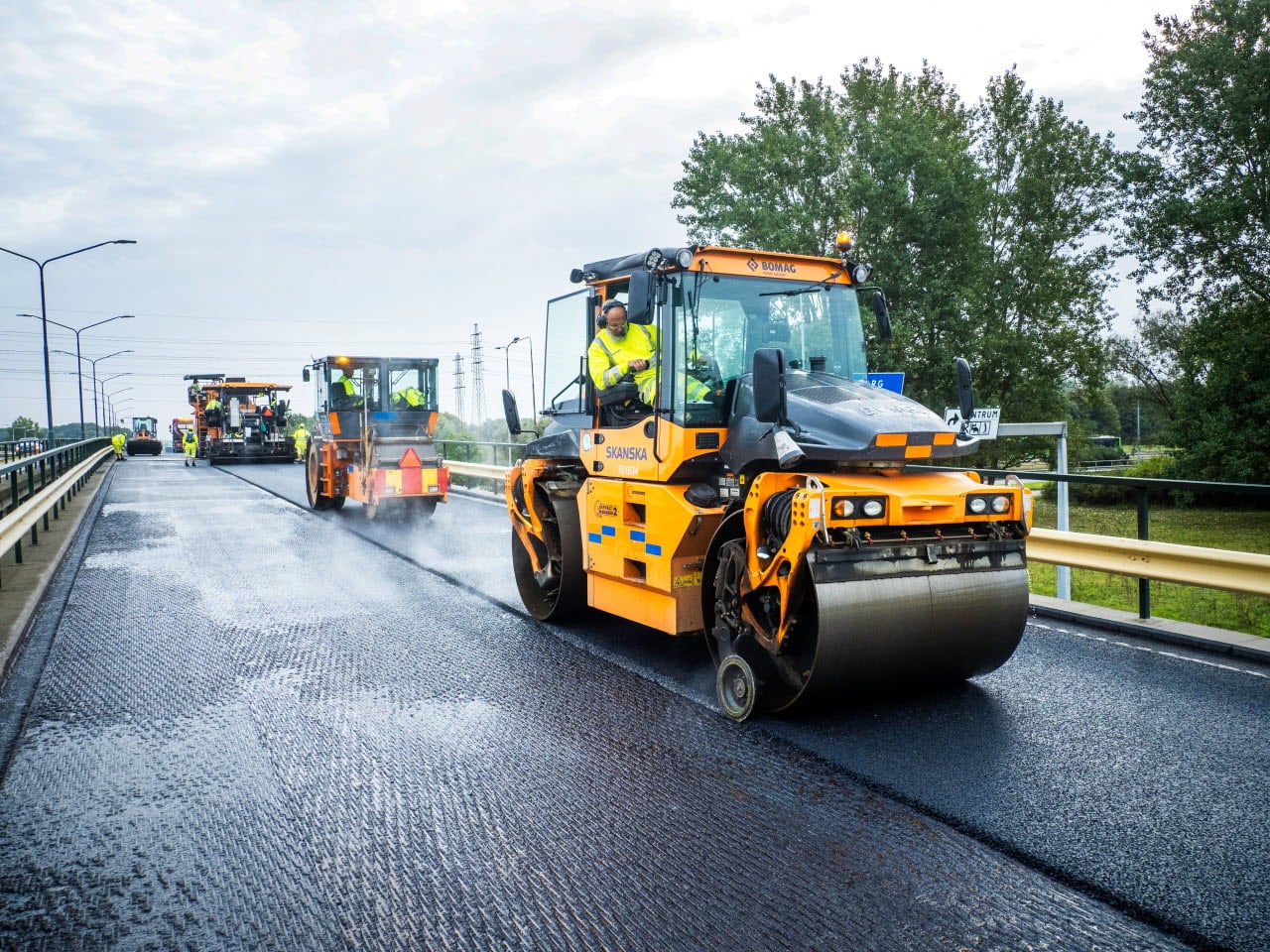
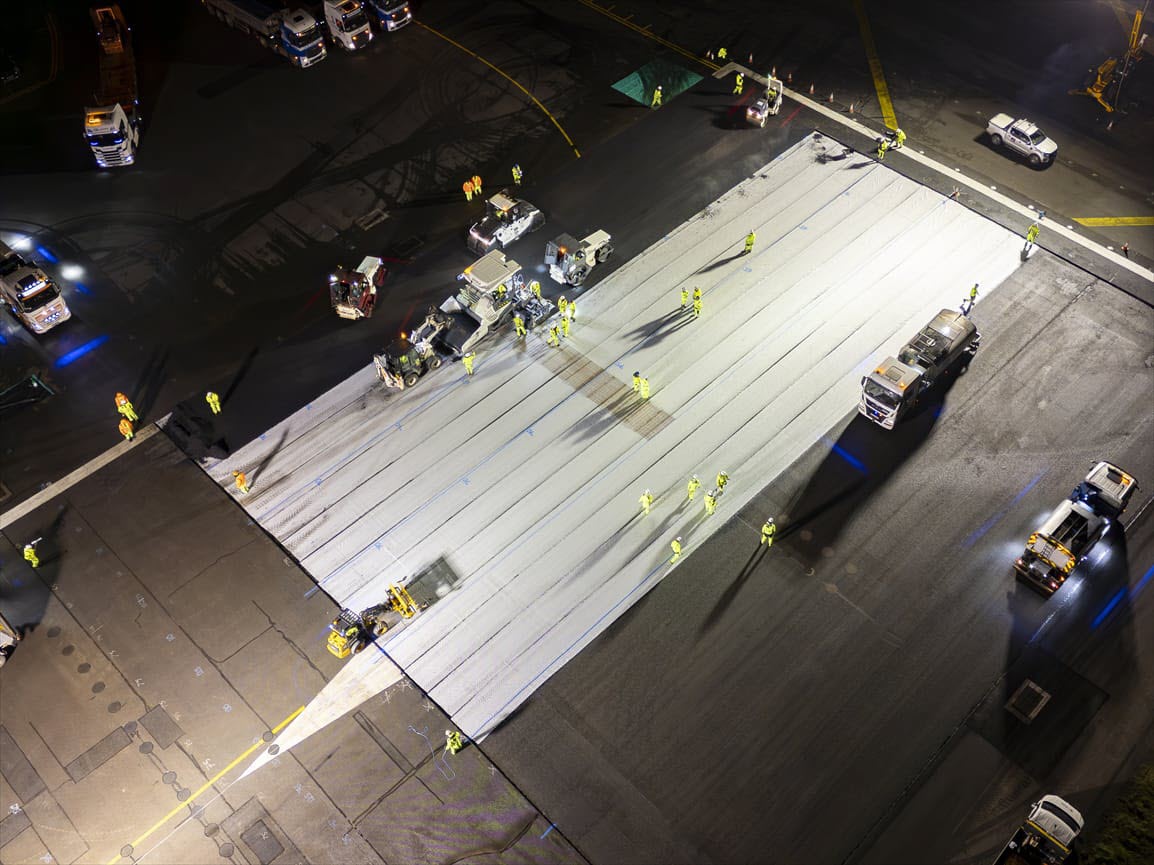
While PMB is common in critical infrastructure projects like runways and bridges in Sweden, Zhu believes a better understanding is needed regarding when and where PMB delivers the greatest value in the broader road network.
"We need to know more about it," he says.
"When we need to use it, we need to select the right material."
Building the evidence base
For Zhu, improving knowledge starts with better data.
"To make decisions, authorities and road owners need numbers to quantify the benefits in a more reliable way," he explains.
While individual projects have demonstrated impressive results, he says decision-makers need a stronger evidence base that explains not only where PMB succeeds, but also why performance varies from one application to another.
Historical Swedish data analysed by Eklöf & Wendel (2024) suggests PMB pavements can achieve service-life improvements of between 8% and 24%, depending on where the material is used.
Zhu believes there is reason to think the long-term potential may be even greater, but stresses that more research is needed to reduce uncertainty and support informed decision-making.
Efforts such as the recently published Nynas white paper contribute to that broader objective by bringing together research and practical experience on PMB performance.
For Zhu, expanding the industry's shared knowledge base will be essential if road authorities are to confidently select the right materials for future infrastructure challenges.
"There is a need to spread and train the industry and the users of PMB," he says.
"That is actually a guarantee to show the good performance of this material."
Looking beyond upfront emissions
Zhu’s work also explores the environmental performance of PMB from a whole-life perspective.
While PMB asphalt typically carries a higher initial carbon footprint than conventional asphalt, Zhu argues that focusing only on production-stage emissions risks overlooking the bigger picture.
“The longer service life can compensate for the higher initial emissions,” he explains.
His lifecycle assessment research has examined how durability improvements can offset upfront environmental impacts over time – particularly on heavily trafficked infrastructure such as motorways and airports where PMB already plays a critical role.
At the same time, Zhu believes the industry must continue working to reduce PMB’s climate footprint further.
Among the most promising approaches, he highlights lower-temperature asphalt production, bio-based materials, and improved recycling systems.
“I would still pick lowering the production temperature as the first priority,” he says.
“Even if we are increasingly using bioenergy, reducing energy use is still worth it.”
From recycling to true circularity
Perhaps the area where Zhu sees the greatest untapped potential is the reuse of PMB-containing reclaimed asphalt.
Today, reclaimed asphalt containing PMB is often mixed back into conventional asphalt streams, meaning much of the original performance value is effectively lost.
“We produced a very high-quality material in the beginning,” Zhu explains.
“Then after one lifecycle, we mix it into ordinary asphalt and lose much of that value.”
Working together with industry partners, including Nynas, Zhu is researching how reclaimed PMB asphalt can instead be reused in new PMB pavements.
The work focuses on everything from binder chemistry and formulation to future specifications that could help authorities support more effective reuse.
“If we recycle PMB reclaimed asphalt back into PMB asphalt, then we can reduce the need for new PMB production,” he says.
“That can also lower emissions.”
For Zhu, the broader goal is clear: building the knowledge needed to make smarter long-term infrastructure decisions.
“We need to have PMB in the toolbox,” he says.
“And when we need it, we need to be ready to use it with confidence.”